
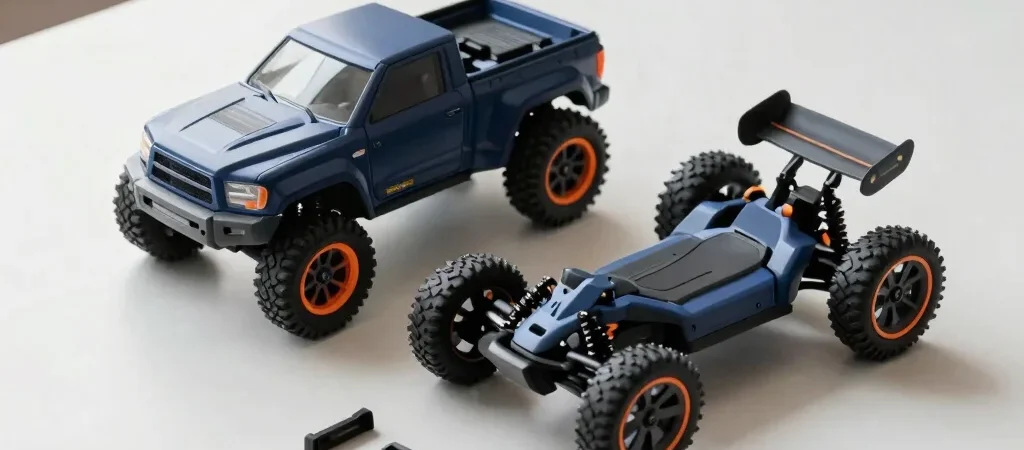
A child unwraps an RC truck, charges it, and is ready to drive; an enthusiast opens a box and starts thinking about setup and parts. Both can be the right choice, but they are not the same kind of purchase. The useful distinction is how much involvement you want after the first drive.
What the labels usually mean
Toy-grade models are generally designed for a simpler route from unboxing to play. Hobby-grade vehicles are generally built around a more involved ownership experience, which may include replaceable components, tuning, or a broader parts ecosystem. Those labels are a starting point, not a substitute for checking the exact model’s specifications and support.
Choose the kind of ownership
For a first vehicle meant for casual runs in a driveway, straightforward controls and a manageable setup may matter more than extensive upgrade options. If the fun is also in fixing, adjusting, or gradually changing the vehicle, look closely at what parts can be replaced and whether the manufacturer documents them. A hobby-grade model can ask more of its owner, so factor in time, tools, and the possibility of additional purchases.
Compare before committing
Before buying, check what comes in the box, what the battery and charger situation is, and where to find replacement parts. Compare those details for the specific models you are considering rather than assuming every vehicle in a category works the same way. Ultimate RC Review may earn a commission if you buy through affiliate links; that does not change the need for a recommendation to be supported by clear product details.